The road to Etosha
The drive from Windhoek to Etosha takes the better part of a day. The road narrows past Otjiwarongo, where the last fuel station stands between pavement and the unpaved track into the park. By late afternoon the landscape has emptied itself of everything but dry grass and sky.
The salt pan
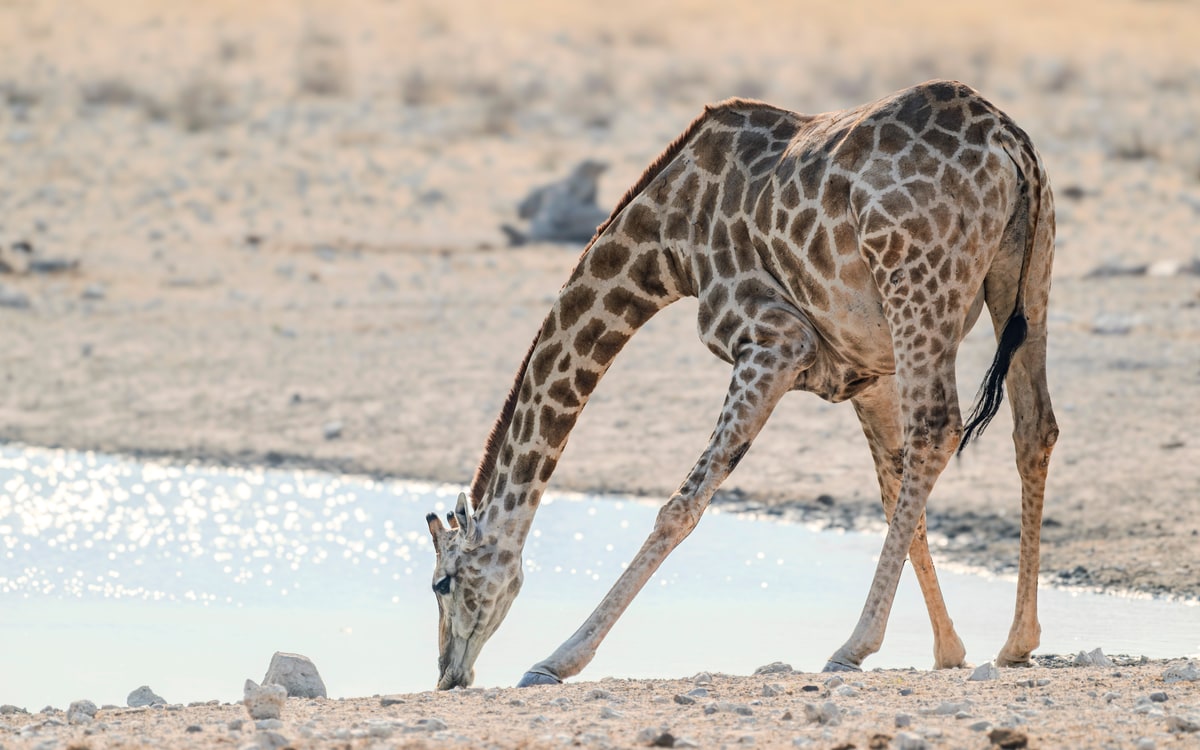
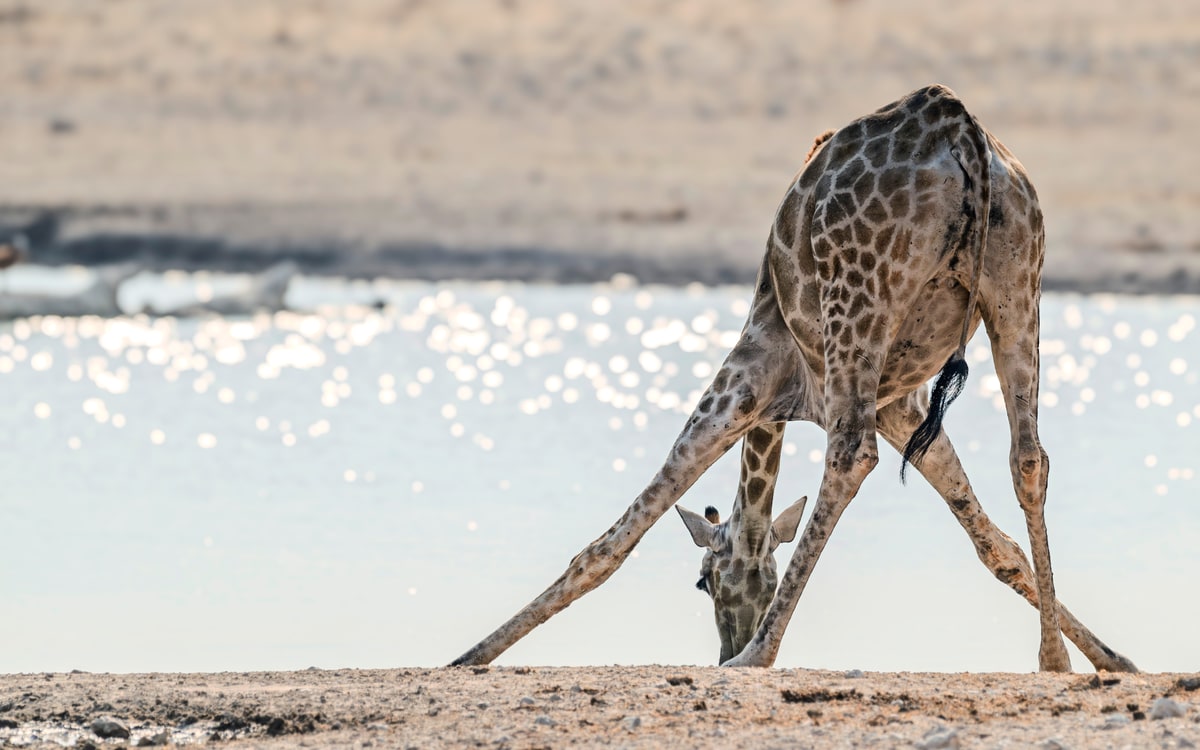
Etosha's salt pan is visible from orbit — a pale scar across the northern plateau, rimmed by mopane woodland. The animals gather at waterholes along the pan's southern edge, drawn by the same scarcity that makes the place feel ancient and unfinished.
Okaukuejo at dusk
We set up at Okaukuejo camp as the light turned. The first evening at the floodlit waterhole was enough to understand why people return here year after year. A black rhino arrived before dark, unhurried, proprietorial.
Morning game drives
Mornings in the park start before dawn. The gate opens at sunrise and the first hour belongs to the animals still crossing the roads — jackals trotting home, springbok drifting between the scrub. The light at that hour is flat and enormous, the kind that makes everything look both close and impossibly far.
The pan itself is a different country. White, featureless, radiating heat by mid-morning. Nothing lives on it directly but everything orbits its edge. Driving the perimeter road feels like circumnavigating a frozen sea.
The last evening
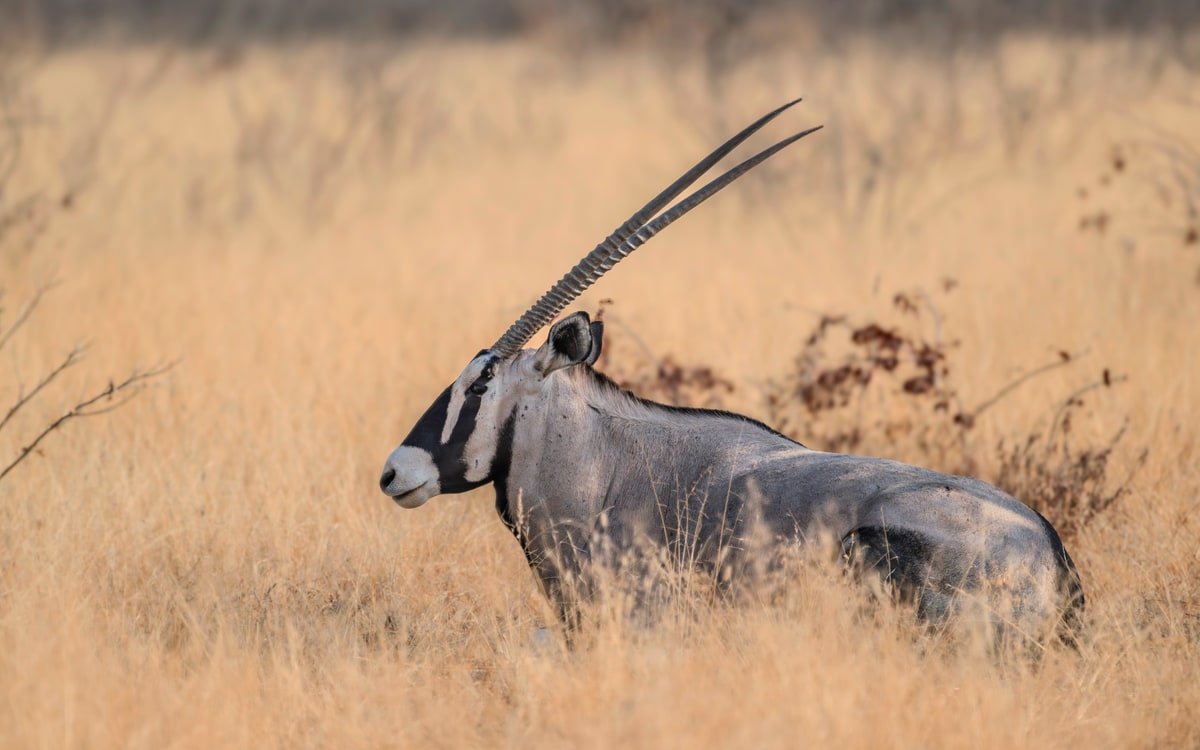
On the last evening we drove to the western end of the pan where the road turns to sand and the tourist traffic disappears. The silence out there has a physical quality — not absence but presence, a pressure against the ears. We watched a herd of gemsbok file across the pan's edge in single file, silhouetted against a sky that had no intention of being subtle about the sunset.